Sunday, April 28, 2013

Picky picky

I do have an element of OCD in my character. Not enough to make me dust very often. But I do like order. In typical fashion, I will avoid an unpleasant task that actually needs doing by instead cleaning or arranging something unnecessary . When it comes to clothing, no one would call me fastidious but there are a few things I like and some that set my teeth on edge.

Watching the TV series Hannibal, the Hannibal character dresses very formally and in a certain kind of high European style. Not appealing, but noticeable.

His tie irritates me. It's done in a double Windsor, which makes for a wide and prominent knot. But he doesn't often dimple it. Undimpled ties irritate me. I wanna grab em and fix em.


I also hate it when shirt collars that should be under and inside the suit jacket stick outside. That's just disorderly.

But the dimple/non-dimple thing. No clue why.


Fatal or trivial?


Not the Catholic system


For hundreds of years, the basic language of Catholicism about sin has rested on the distinction between mortal and venial sin, that is, serious and not-serious. The language, I believe, comes from St Augustine but I know little of its history.

Mortal sin is sin which, as the term suggests, kills. That is, kills the life of grace in the soul. Extinguishes it. Venial sin is pardonable sin (from venia, forgiveness, pardon, excuse), which damages the soul, but not fatally. Fifty venial sins do not equal one mortal sin. One mortal sin does something which a hundred venial sins can't.

Mortal sins require a certain commitment. You have to be dealing with a serious matter, know that, and still freely choose to do it. If the issue is grave matter, one which normally is a mortal sin, but you either A. don't know that or B. don't fully consent to what you are doing, then it reverts to venial.


If you commit mortal sin, just one, you may not approach the altar for Communion. All grace is gone from you. You must go to confession first. Otherwise, you add sacrilege to the mix. If you have committed only venial sins, even many of them, you are welcome, even encouraged to go. One of the little known effects of Holy Communion is the forgiveness of venial sins, something taught both in the Baltimore and new catechism.

Dante understood the difference. Mortal sin sends you to the Inferno, which only goes downward to a dead end and from which there is no escape.


Mohammed eternally having his gut split open in Hell 
because he introduced such division into the world.

Venial sin puts you in the Purgatorio, a mountain you have to climb, but whose eventual top is the entrance of heaven, the Paradiso. Someday purgatory will be empty. Hell, never.


So you can see that, theological niceties aside, the message and the effect of this language is pretty clear: certain kinds of sins are serious; others simply are not. Capital crime vs misdemeanor. Mortal, to hell. Venial, no big whoop.
Consequently, the only practical way the Church has of marking something as important and serious is to make a related transgression a mortal sin*. Cause unless it's mortal, it's venial. And if it's venial, let's face it, for most people, it's trivial. The difference between adultery and stealing a stapler from work.

How this has played out is that if the Church really doesn't want you to do something, no matter what the act is, it has to be a  mortal sin. No other option, really.

That's why, to prevent anyone from even starting down a road that might damage the place of sacramental marriage-and-family, a seemingly ordinary and trivial thing like wanking off is a mortal sin. If it weren't, everybody would do it...

That's why, in the days of the Six Precepts of the Church, it was a mortal sin to miss Mass on Sunday, to fail to make your confession and go to Communion once a year, to marry in contravention of Church law. The famous rule against eating meat on Friday was included in this list, as was contributing to the financial support of the Church.

Like the original Ten Commands of God, these Six Precepts are best understood as a whole rather than one by one. These six items described, in real and concrete terms, who was a practicing Catholic and who wasn't. Since that is/was a big deal, at least 4 of the 6 were clearly marked as mortal sin territory. Friday abstinence was universally believed to be a mortal matter, although if you look in the Catechism, it's not specifically there. Same thing for giving money.

So the question is, in terms of a human institution performing what it considers a divine mission, not "Would God really send little me to hell for all eternity if I just went to the beach one Sunday out of 52 instead of to Mass, like I do all the other Sundays?"  The question is, "Does the Church think apparently small thing is important to some larger issue or value on which its mission depends?" For want of a nail, the shoe was lost. (A poem my Dad knew from memory and made me learn!)

From this quite non-theological, even political/sociological point of view, what's mortally sinful (missing Mass = committing murder = sleeping with your own sex) is not always the act itself --though the Church's theology can't admit that-- but what role it plays in the larger scheme of things.

If missing Sunday Mass were only venial, then that means Mass is not important. And if Mass is not important in Catholicism, then nothing is. If homosexuality were only venial, that means male-female differences, which are institutionalized and sanctified in the Sacrament of marriage-for-procreation as their purpose and shape, are not important and neither is the Sacrament.

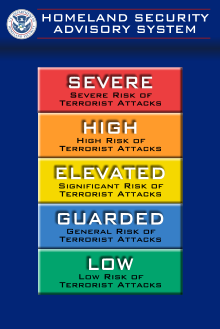
Unlike our recently discarded complex Homeland Security schema, it's pretty much --aside from subjective conditions**-- an either-or language. Not elegant, but clear. And, in a way, it understands its audience.


*There's excommunication, but that's a this-worldly administrative penalty laid on top of certain mortal sins.


**Catechism,2352. "To form an equitable judgment about the subjects' moral responsibility and to guide pastoral action, one must take into account the affective immaturity, force of acquired
habit, conditions of anxiety or other psychological or social factors that can lessen, if not
even reduce to a minimum, moral culpability."


--


My bad

My Christian Nihilist friend believes six impossible --well, at least contradictory-- things before breakfast each and every day. He believes life is meaningless, but would give his for his dog. He is a loner libertarian who consistently votes for statist Democrats. He likes Jesus but has no use for God. Other than that he's a very nice guy.

One of his solutions to America's broken state is to re-institute the draft. No exemptions. He is a military veteran who holds in contempt Commanders in Chief who never served...well, there it gets complicated. Obama is exempt because he is Black, which in my friend's mind pretty well excuses anything. And Bush was in the military, but not actually in combat, so that made him a privileged asshole...you see how it goes...Anyway, he thinks it would do everyone a lot of good, especially the spoiled rich kids.

I have opposed the idea, largely because the energy and money it would take to deal with a huge number of America's current multicultural youth would be a waste of time at best. Fragging would start up in ten minutes.

But today I thought that I might be wrong, that this in fact might be a very good idea.

What if all those leukophore university kids who will grow up voting liberal Democrat were forced to live cheek by jowl with the Other America they are so passionately in favor of and, of course, live at a safe and compassionate distance from? What if they had to experience what Viet Nam era draftees did: right in there 24/7 with the hip hop yoofs and all the colorful eses from El Barrio for a couple of years?

Who knows? That might...and I emphasize might...wake them up to what their futures actually are in the new Rainbow America they love so much.

Does this idea make me a bad person?

They even censor The One Himself

HuffPo edits Obama’s joke calling himself ‘strapping young Muslim socialist’ - BizPac Review:

Is O a Muslim? No. But he is an enabler, promoter, protector and apologist for (and to) Islam.

Is O a socialist?  Not in the classical sense of outright "State ownership of the means of production", but in the National Socialist and EuroSocialist sense of regulating your property so heavily that, while you retain paper ownership and fiscal responsibility for it, the government tells more and more how you may, may not or must use it; and of taxing you at such rates as it may deem appropriate, since, in reality, you did not build that yourself and other people have needs more dire than yours and you have made enough money as it is.


'via Blog this'

Ramblings with coffee on a Sunday

In logical argument, it is a fallacy to confuse correlation with causation. Great philosophers even argue about whether causes are real. In day-to-day life, which is neither a classroom nor a laboratory, it's not so much of an argument. Circumstantial evidence, when strong, can be sufficient for a conviction. We live in the world of doxa, not of Parmenidean absolutes. Survival depends on adapting to what is real in our actual level of existence, not some Platonic empyrean. At the sub-atomic level, there are vast realms of emptiness between particles. But if you try walking through a wall, all you'll get for your trouble is a bloody nose. Sikhs may believe that their God has no enemies, but their history tells them that they certainly do.


Very few things are universally true, that is, without exception. Many things are generally true, most of the time, more often than not, regularly or commonly. To ignore these or dismiss them, especially when they touch on dangerous or taboo subjects is the folly of moral and cognitive perfectionism, sometimes leading to disaster.


During my studies of Gnosticism, I discovered the typical three-fold anthropology some of them used: the human race was divided into hylics, psychics and pneumatics. Hylics (those made of matter) lived by the laws of biology. Psychics (those possessed of a soul as well) lived by the laws of morality. Gnostics come from the class of pneumatics (those possessing the divine spirit) lived by the divine consciousness which transcends both biology and morality. Gnostics were not egalitarians.

But modern Gnostics usually are. For them I developed another type, the pseudo-Gnostic who mistakes the values of morality for divine consciousness: the Angelics. Actual Gnostics are aware of their true identity AND the true identity of the irremediably fallen world in which they find themselves. The Angelics believe that because they imagine themselves divine, that the world is once again a garden paradise. This is a flight into spirituality, rather like the flight into health you find in early stages of therapy. This hubristic mistake actually makes them more closely allied to the Demiurge, a second-order being who deludedly thinks that he is the only God and the controller of the universe. In political terms, these are called Liberals.


What do you think are the strongest societal taboos for us?  I suggest two: pedophilia and racial discrimination (by Whites). Interestingly, racial miscegenation (by Whites) was once the strongest taboo...


Catholic sexual morality is determined by a single fundamental attitude and a single fundamental law. The attitude is the primacy, protection and promotion of marriage-and-family, that is, of the Seventh Sacrament, Matrimony. What protects and promotes marriage-and-family will be protected and promoted by the Church. Whatever detracts from it or threatens it or damages it will be rejected by the Church, even if it seems unconnected. It's the Catholic version of the rabbinic theme, Building a fence around the Torah. You could call it Building a fence around the Sacrament. This attitude is, I suspect, prior to any explicit rules or theories.

It explains why something seemingly as trivial as masturbation is considered seriously sinful. Like homosexuality, it is "intrinsically and gravely disordered." (Catechism 2352).

The fundamental law, which expresses this deep conviction, is the Catholic sexual axiom, the one sentence on which all of its sexual morality is built: The only legitimate (non-sinful) form of sexual intercourse is that between a married man and woman, and open to the creation of a child. As the new Catechism makes clear (2351), any sexual pleasure sought outside its unitive (man and wife) and procreative (open to child)  purposes is simply lust. Legitimating anything else implodes the axiom and threatens or detracts from what the Seventh Sacrament sanctifies: marriage-and-family.

Keeping these two things in mind both explains and predicts Church responses to any phenomenon which touches on matrimony.
The exaltation of celibacy for monks and priests, btw, actually proves this point because one sacrifices something fundamentally good for the sake of God. It's not giving up a sin, but offering a sacrifice. And you never offer God anything as a sacrifice which is not valuable.


I used to complain that the Catholic Church unrealistically acted as if there should be only two kinds of people in the world: married couples and celibates. Well, compassion for human failing aside [1], it really has no other choice if it's to do its job. Otherwise the axiom falls and the Seventh Sacrament follows. And I really don't know of societies where the (heterosexual, of course) marriage institution crumbles (regardless of its form) and good things result.
[1] It can have compassion on a failing but will call it a failing and not transform it into an option.


Having said that, Ex Cathedra's experience of the world leads him to believe that no system of any kind, moral or otherwise, can account successfully for all human behavior. Moral systems there must be. But reality will always outstrip them in unexpected ways. The Church must act as if there are only marrieds and celibates, but that does not make it so.


Facts and facades

I alternate using Bing as my search engine, when Google pisses me off. Bing puts up a new picture every day. They're usually quite striking. And they include little tidbits (as opposed to big tidbits?) of info about the pic to help you guess what you're seeing.

Today we had a glowing set of little tidbits about this pic, which is the harbor of Baltimore. I remember visiting there in the 70's when it was new. It was nice. Past tense.


I added the crime stats rating, showing the national and local numbers. Charming Balmer --as the locals call it-- is one of the Top Ten Most Dangerous Cities in America.

---

Finally

Finally my role as a politico-cultural commentator is being recognized.

For years now, my most popular posts have been pictures of men deshabilles. Now one of my gems of insight about the confluence of language and European high politics has surged head, reaching almost 10,000 views in the last few months.

Here it is.

Does this mean that the cyberworld is maturing at last?

--

Saturday, April 27, 2013

Microsoft geeks

Microsoft has a history of upgrading its programs in ways that make me nuts. Taking away my ability to do something I was once able to do. In the name of progress.

The fonts in Windows 7 are numerous and many of them non-Latin. Fair enough. This is a global product.

But I am not allowed to delete what Windows considers "protected" fonts. So I to scroll through them in my fonts list to get to the ones I like.

And even the foreign ones I like do not print in the foreign scripts, just in Latin.

Unless I change the whole keyboard. Which requires a previous set of choices and such.

Were I still doing papers which required me to add text in Greek, for example, I would have to switch keyboards to do it and lack choice of typefaces.

Amazing how frustrated and murderous these things make me feel.


Unexpected moments


Although stretching out The Hobbit through three movies is too much, there are moving moments.


When the great eagles come to rescue them from the Pale Orc. Like the end of LOTR, when they come to rescue Sam and Frodo. Great eagles, the way angels should have been. Loyal to smaller creatures who can do nothing to repay them.

The fate of the dwarves, dispossessed and fighting to regain a lost homeland.

And the ending song, Song of the Lonely Mountain, ain't bad, either.

Bearly tolerable


I watched two gay Bear movies, Bearcity 1 and 2. (Spoilers below).


Yikes.

The primary romantic story is between a young bear-chaser and a handsome bearded older man. The first movie is the drama of their finally overcoming various obstacles and falling in love. In the second move, the older one proposes marriage. The younger one first refuses, scared of such a commitment at his age and then agrees. The wedding is set in Provincetown, with a gathering of friends, former lovers (and the young guy's hyper-accepting parents) during Bear Week.


The climax comes when they decide, in flagrante ceremonio of course, not to proceed with the wedding because "it doesn't feel right, even though they love each other." So they break up, revert to being just friends and ex's and proceed to pick up new guys and make out with them.

Really.

The default model for the supporting friend characters --a hyper queeny twink or a very girthful fat-and-jolly type-- is the sassy Black girl. And we have drag, of course. Must have drag.

And one reviewer expressed his pleasure that the movie did not rely on tired gay cliches and stereotypes.

Really.

Wikipedia, famous for its inclusive authorship and its spotty reliability, describes a Bear as "a large, hairy man who projects an image of rugged masculinity...Some bears place importance on presenting a hypermasculine image and may shun interaction with, and even disdain, men who exhibit effeminacy."

Really?
Related Posts Plugin for WordPress, Blogger...