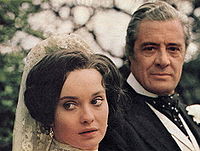
Isidore Kaufmann, c. 1900
Today is the Jewish Day of Atonement, total fasting and day-long prayer to ask forgiveness of the past year's sins.

Recreation of the rite by the Temple Institute in Jerusalem
When the Jerusalem Temple existed, the high priest entered the Holy of Holies only on this day, with sacrificial blood, and spoke the four-letter Divine Name out loud, which was forbidden everywhere else and to everyone else.
It's a rich and strange word, atonement. We hear it first now in English as "reparation", as making up for some wrong. The English word itself does appear to mean "at-one" ment, unification. Making up for some wrong in order to create communion.
In Christianity, The Atonement --Christ's death on the cross as a sacrifice to God for mankind's sins--is the most humanly resonant archetype in the library but for Enlightened Westerners, the most scandalous and embarrassing. The Epistle to the Hebrews connects the High Priest's ritual with Jesus' crucifixion.

This Slovak crucifixion ikon shows Christ's blood descending on the skull of Adam,
whom legend says was buried beneath Golgotha, the Place of the Skull.
Like most of our basic emotions and moods, guilt eludes our attempts to domesticate it. I have found it very ironic that the liberal culture which mocks the primitivity of "Original Sin" triumphantly grants me liberation from guilt about my sexual life then wants me to feel eternally guilty for societal wrongs done to strangers long before I was born.
A deceased Unitarian friend once told me the difference between the different kinds of Western guilt:
Catholics feel guilty for what they do, Jews feel guilty for what they don't do, and Protestants feel guilty just for not being nice enough.
The Confiteor ("I confess") is a part of the preparatory prayers of the Mass. I remember having to learn the Roman version in Latin as a boy; very complex because the case endings on the twice-spoken saints' name list there --blessed Mary ever Virgin, blessed Michael the Archangel, blessed John the Baptist, the holy Apostles Peter and Paul-- changed from first to second recitiation, from dative to accusative. Quite a mouthful of nuance. And the threefold striking of the breast with the words, "mea culpa, mea culpa, mea maxima culpa".
Here's the Dominican Order's version. Fewer saints and culpa's but more detail in the sins: thought, speech, deed and omission.

As you would expect from an introverted thinking type, most of the sins of which I feel are in thought and omission. Omission especially. As the recent English translation of "opere et omissione" makes clear: "...what I have done and what I have failed to do."
To my Jewish friends today, "an easy fast".